







LABORATORY PROJECTS

Pulse Holography
Introduction
Holographic recording of objects using continuous-wave lasers always has limitations regarding the selection of objects to be imaged. This is because, to achieve maximum diffraction efficiency, the interference pattern must not shift by a distance comparable to the wavelength during the recording process. Such a shift can occur as a result of even the slightest movement of the photographic plate, optical components, or the object being recorded during hologram recording.
Typically, shifts occur due to the influence of external mechanical factors on the optical system and the object being imaged: vibrations, air convection, or even changes in the linear dimensions of the elements due to temperature fluctuations. This is precisely why, for recording a high-quality hologram, the choice of the type of object to be imaged is very important. The less susceptible the object’s material is to external influences, the better it is for holographic recording.
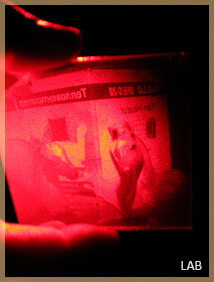
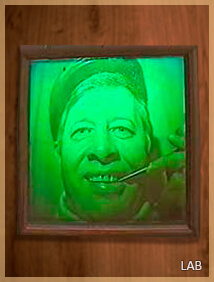
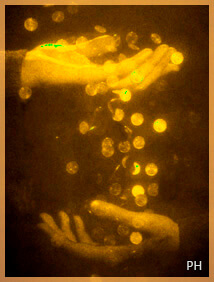
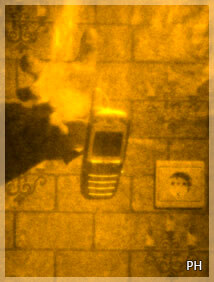
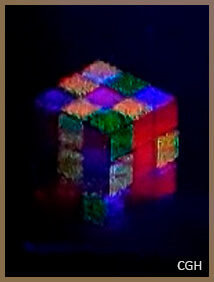
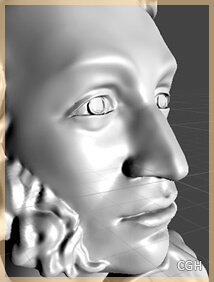
Objects made of metals with low coefficients of thermal expansion are considered ideal. For recording a metal coin, for example, the requirements for circuit stability are the lowest. But for recording a doll with many small details, including fine hairs, the requirements for circuit stability are extremely high (Fig. 1)